
About All Tours Sunrise ToursFrom Semarang PortAnd Prambanan ToursFrom Yogyakarta Tours Directions Hours & Fees
Find Tours 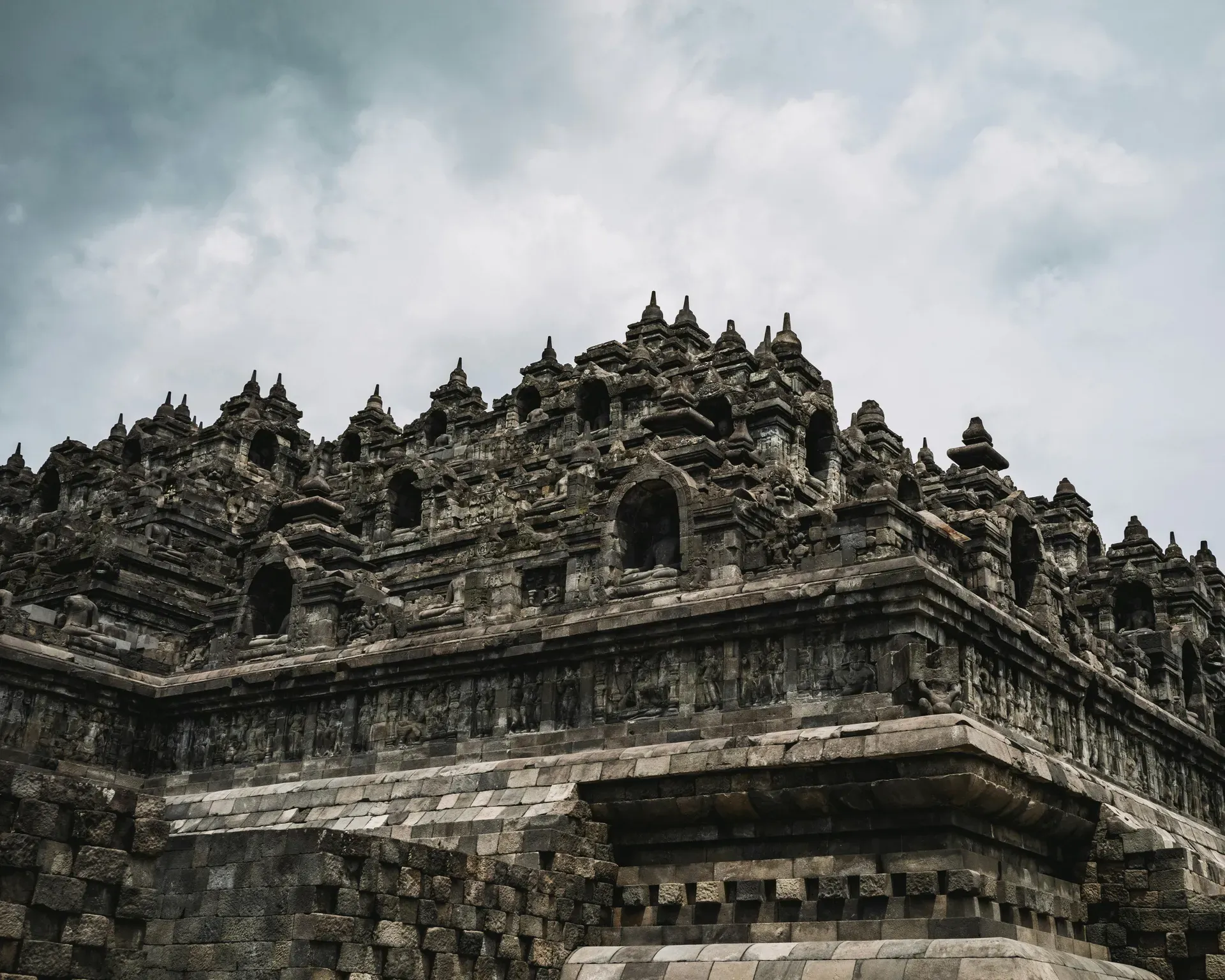
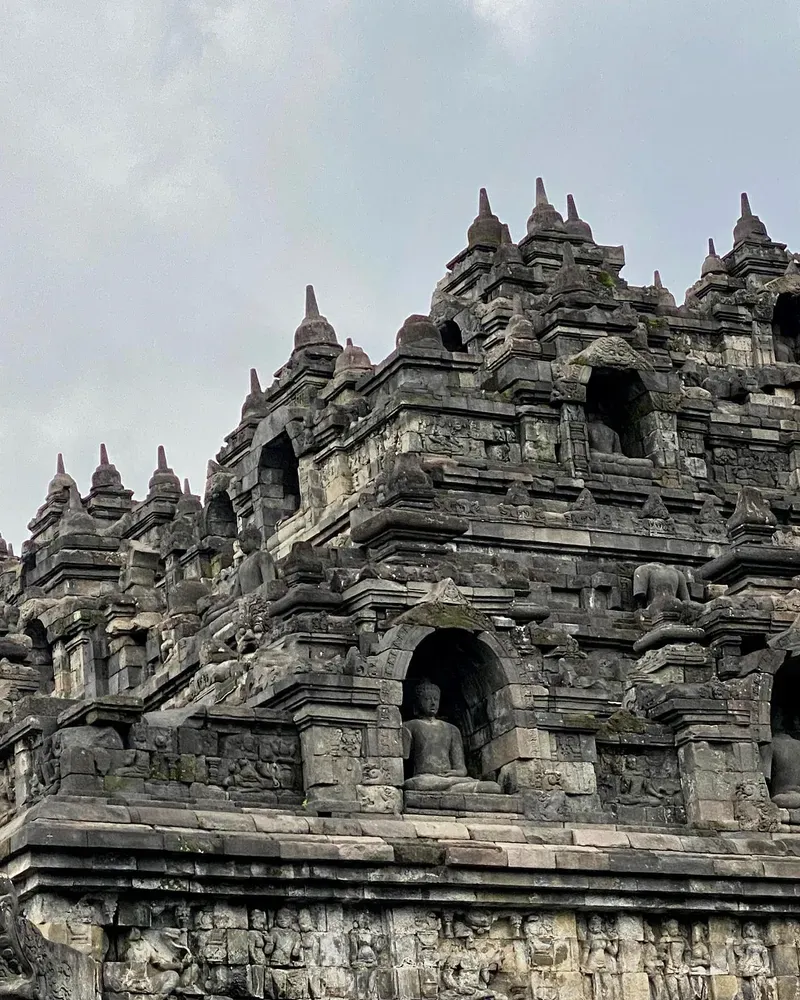
Constructed from 2 million blocks of volcanic stone, Borobudur is a massive 9th-century step pyramid in Central Java. Climbing its nine stacked platforms reveals a vast ensemble of ancient Buddhist art, featuring 2,672 relief panels and 504 statues.
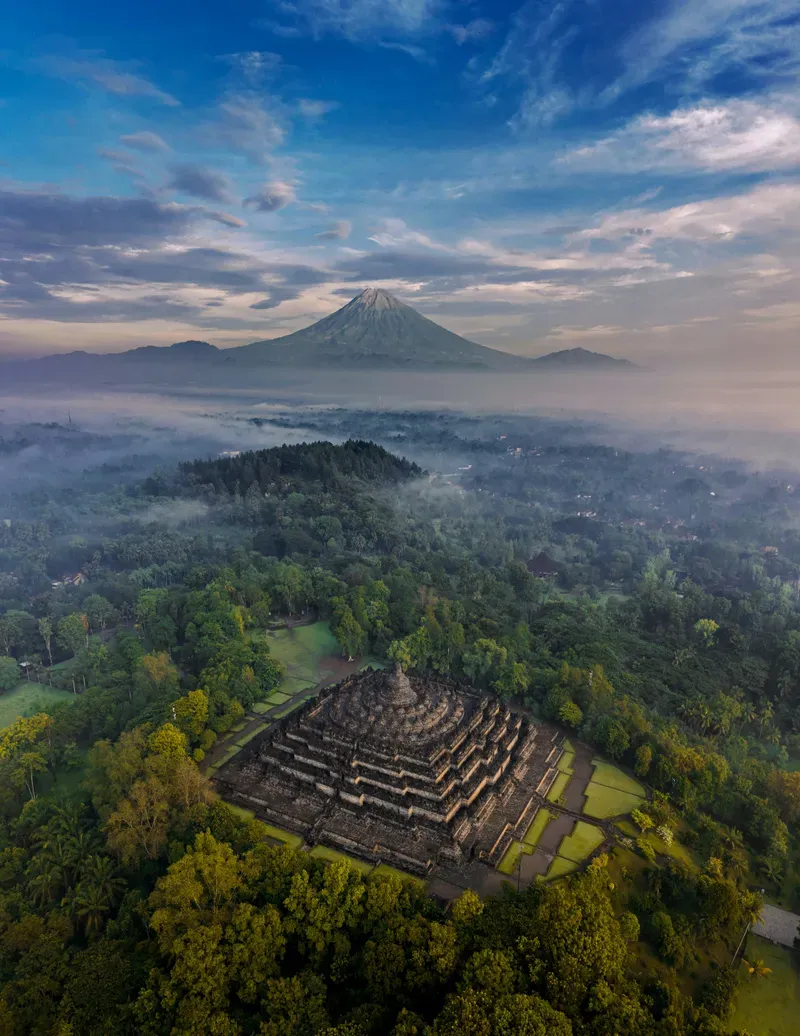
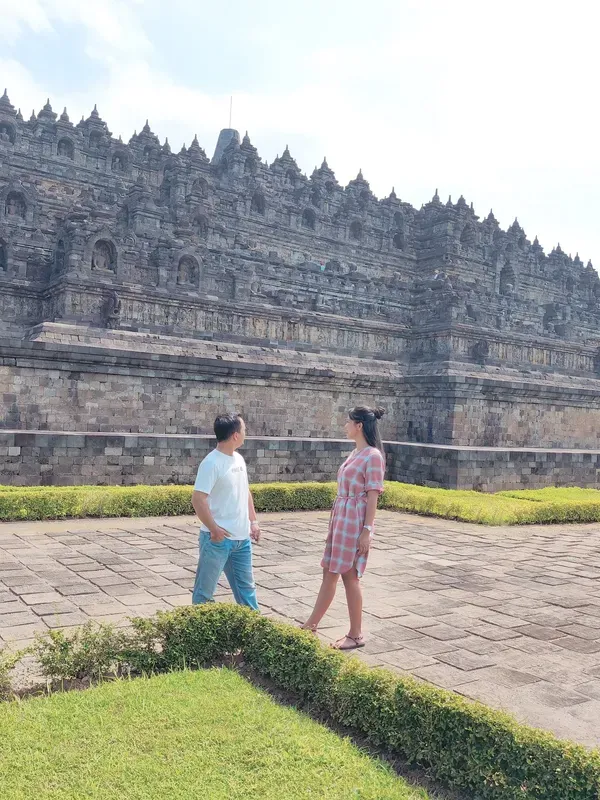
Find Guided ToursBorobudur is the world's largest Buddhist temple. Located in the Kedu Valley of Central Java, approximately 40 kilometers northwest of Yogyakarta, this 9th-century Mahayana monument stands 35 meters high. The structure is a massive step pyramid constructed from approximately two million blocks of volcanic stone, totaling 55,000 cubic meters. Its base measures exactly 123 by 123 meters, supporting nine stacked platforms, six square and three circular, that culminate in a large central dome.
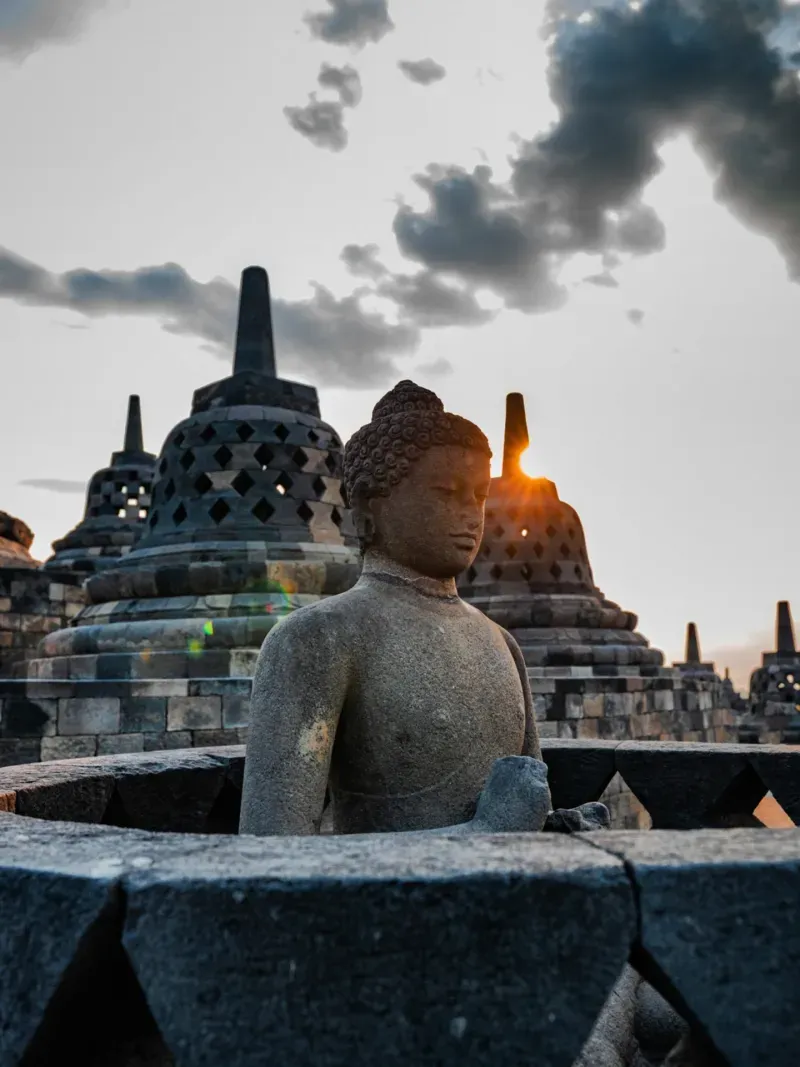
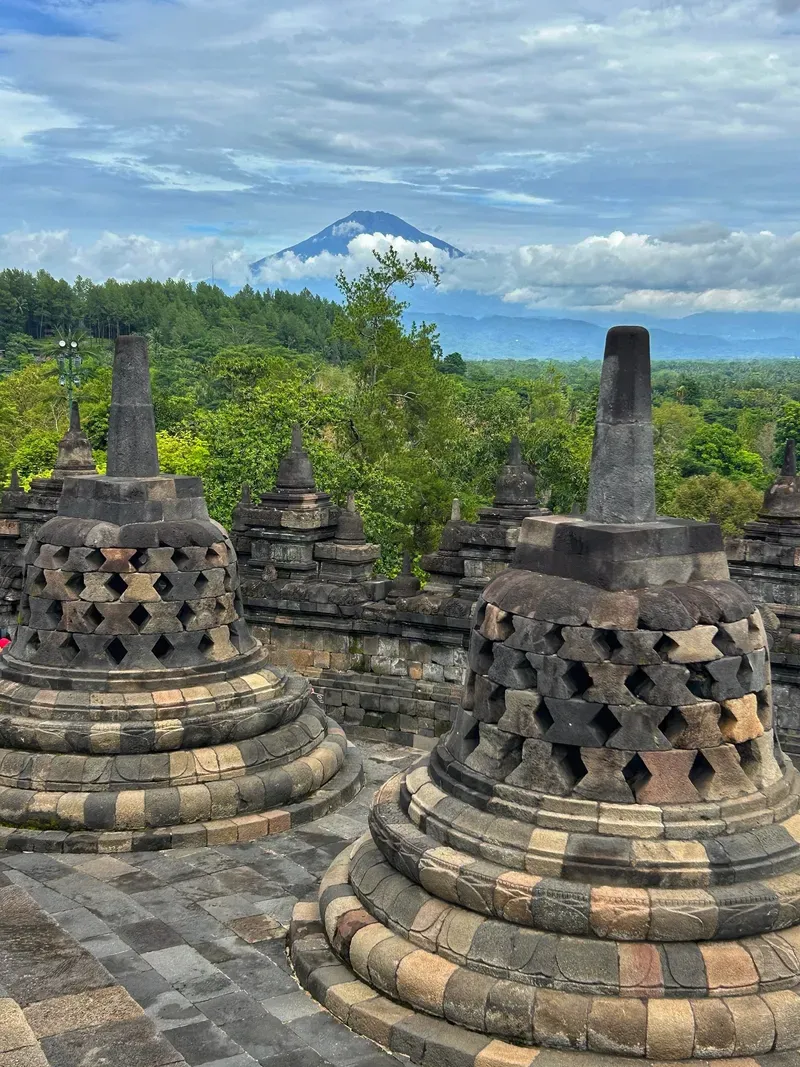
The temple serves as a physical representation of Buddhist cosmology. It is designed to guide pilgrims from the earthly world of desire at its base up to the realm of formlessness and enlightenment at the summit. Borobudur holds the most complete ensemble of Buddhist reliefs globally. The monument features 2,672 intricate relief panels and 504 Buddha statues, alongside 72 perforated stupas that encircle the top level.
Construction of the site began around 780 AD under the Sailendra Dynasty. The massive undertaking took between 75 and 80 years to complete. Borobudur did not remain an active center of worship indefinitely. The temple was abandoned during the 14th century following the decline of Java's Hindu-Buddhist kingdoms and the subsequent arrival of Islam. Over time, it vanished beneath dense jungle growth and layers of volcanic ash.
The monument remained hidden until 1814, when it was brought back to global attention by Sir Thomas Stamford Raffles. To save the deteriorating stone pyramid, the Indonesian government and UNESCO launched a massive international restoration project that ran from 1973 to 1983. Today, Borobudur is Indonesia's most visited tourist attraction and was officially designated a UNESCO World Heritage Site in 1991.
Discover the full history and cultural significance on our About page.
Walk the lower levels to examine 2,672 intricate stone relief panels depicting the life of the Buddha through the Jataka and Lalitavistara narratives. Alongside 504 Buddha statues, this collection forms the most complete ensemble of Buddhist reliefs in the world, carved from volcanic stone over twelve centuries ago.
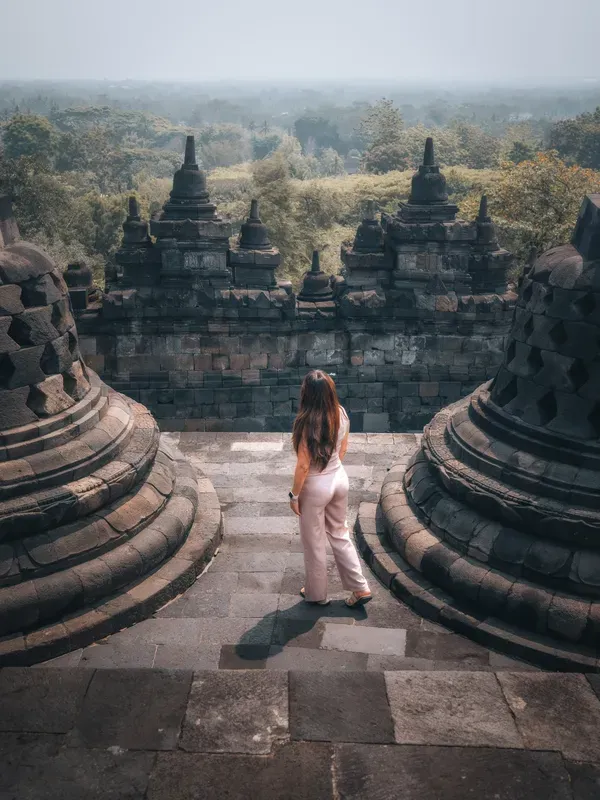
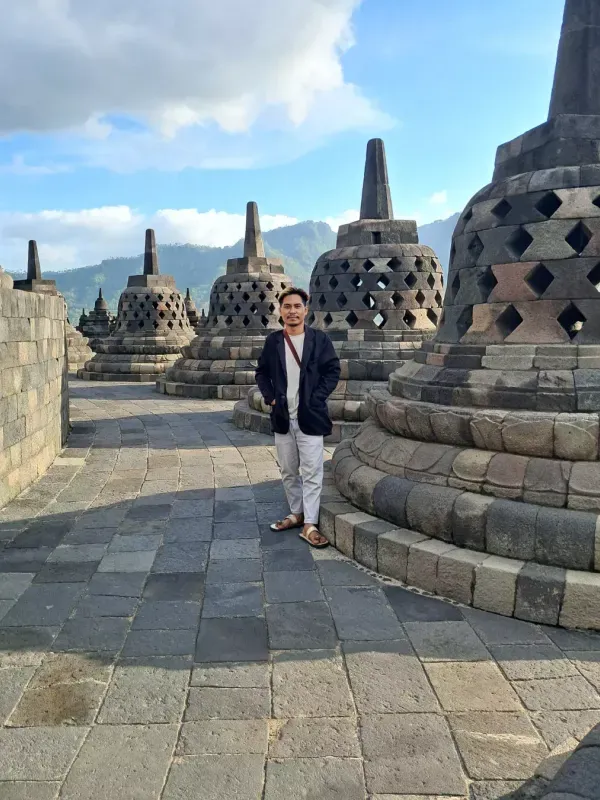
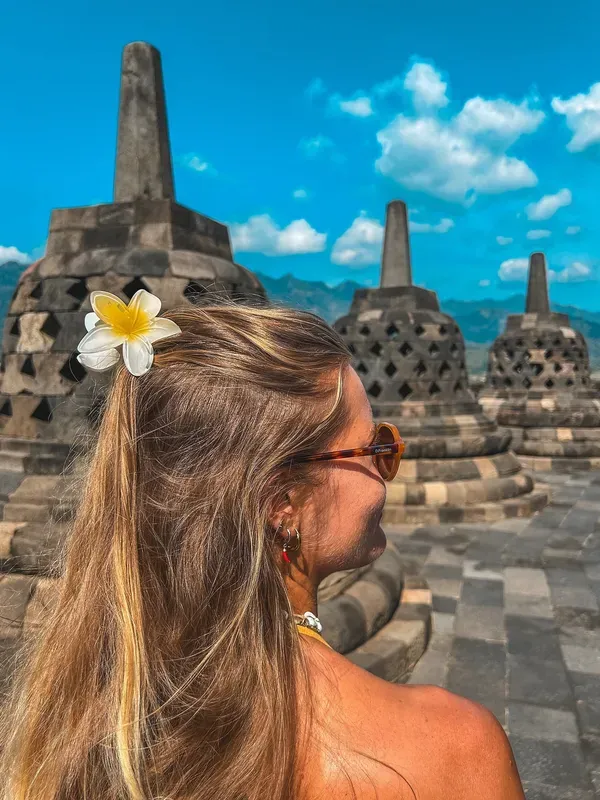
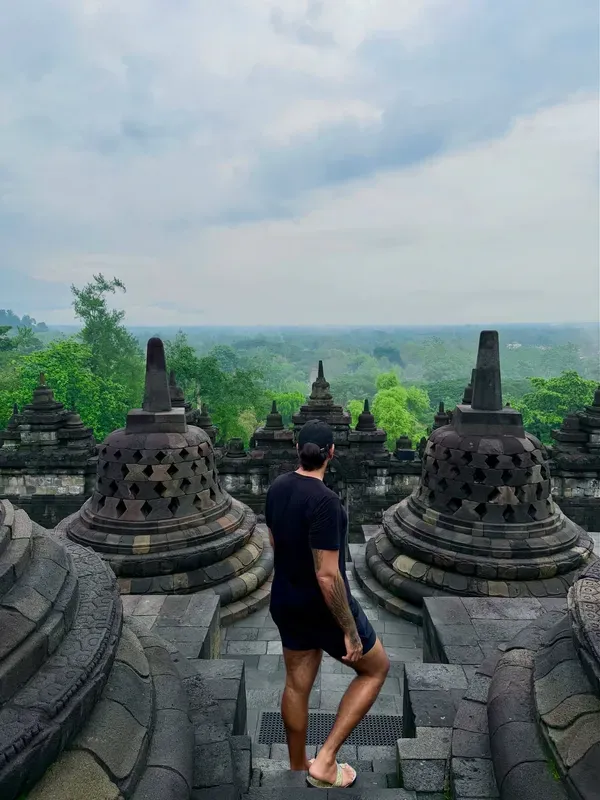
Ascend 100 to 150 steep stone steps to reach the Arupadhatu, the monument's highest level. Here, 72 perforated stupas encircle a massive central dome. This summit represents the realm of formlessness in Buddhist cosmology and provides clear views of the surrounding Kedu Valley and twin volcanoes.
Direct sunrise access on the temple structure ended in 2020. Instead, head 15 minutes away to Punthuk Setumbu. This elevated viewpoint lets you watch the 9th-century monument emerge from the morning mist, framed by the active Mount Merapi and Mount Merbabu volcanoes to the northeast.
To protect the 55,000 cubic meters of volcanic stone from erosion, visitors climbing the structure must wear special Upanat sandals. Handcrafted by local villagers, these woven shoes preserve the ancient stairs. You are allowed to keep them as a unique souvenir after your 1.5-hour guided session.
Hand-picked tours with free cancellation and verified reviews
 Free Cancellation 6h
  Free Cancellation
  Free Cancellation
 Free Cancellation
  Free Cancellation 12h
 Free Cancellation
 The optimal time to visit Borobudur is during the dry season from May to September. These months provide clear skies for sunrise viewing and ensure the steep stone steps remain dry and safe to climb.
Conditions transition from the peak rainy season in March to the dry season by May. Early spring brings heavy rain, while May introduces clearer skies and safer climbing conditions.
This period falls squarely within the dry season, offering the most reliable weather. Visitors can expect clear skies for volcano views and dry, safe stone stairs on the temple structure.
September provides excellent dry conditions, but weather rapidly deteriorates by November. The onset of the rainy season brings heavy downpours that obscure surrounding views and create slippery, hazardous steps.
These months represent the peak of the rainy season. Heavy downpours frequently obscure the views of the surrounding volcanoes and make the steep stone stairs extremely dangerous to climb.
The Borobudur Temple Grounds operate daily from 06:30 to 17:30. Access to the Temple Structure is available from 08:30 to 15:30. The structure is traditionally closed on Mondays for maintenance, though reports indicate potential daily opening trials for 2025 and 2026. Direct sunrise access on the monument was discontinued in 2020.
| Category | Price |
|---|---|
| Foreigner Temple Structure (climb-up) | 455,000 IDR |
| Foreigner Temple Ground only | 412,500 IDR |
| International Student (valid ISIC card) | 325,000 IDR |
Advance online booking through borobudurpark.com is mandatory for the Temple Structure ticket because daily climbers are capped at 1,200 people across specific hourly time slots. Booking one to two weeks ahead is highly recommended. The structure ticket includes a mandatory certified local guide for a 1.5-hour session and the required 'Upanat' woven sandals.
For complete schedules and ticket prices, visit our Hours & Fees page.
Borobudur is located approximately 40 kilometers northwest of Yogyakarta. Visitors typically reach the monument from the city center or airport using private taxis, public shuttle buses, or rental scooters.
📍 Kedu Valley, Magelang, Central Java
Hiring a private vehicle is the most direct way to travel the 40 kilometers from the Yogyakarta city center. Reliable options include Bluebird taxis or ride-hailing apps like Grab and Gojek. A standard one-way trip typically costs 230,000 IDR. Alternatively, you can book a car with a driver for a full eight-hour day for approximately 600,000 IDR.
The DAMRI shuttle bus provides the most budget-friendly transportation to the temple complex. Routes depart from either Yogyakarta International Airport or the Malioboro area, covering a distance of roughly 42 kilometers. These buses operate on a set timetable throughout the day. Be aware that travel times frequently fluctuate based on local traffic conditions.
Renting a scooter in Yogyakarta gives solo travelers flexibility for the 40-kilometer drive to the temple. The route heads northwest from the city directly toward Magelang. Riders must exercise strict caution during the trip. This main road is a highly active transport artery heavily populated with large commercial trucks and buses.
For detailed transport options and routes, visit our Directions page.
Access to the main temple structure is strictly limited to 1,200 daily visitors across specific hourly time slots. You must secure these tickets one to two weeks in advance through the official borobudurpark.com website. Select the 08:30 AM slot to minimize exposure to intense midday heat and avoid peak crowds.
Direct sunrise access on the temple structure ended in 2020. To see the monument emerge from the morning mist, head to Punthuk Setumbu. This viewpoint is located 15 minutes away and provides a clear line of sight to Borobudur with Mount Merapi behind it. Alternatively, enter the main grounds at 06:30 AM.
The 35-meter high monument offers zero shade once you begin your climb. Heat exhaustion is a common issue by 11:00 AM due to high humidity. Bring a hat, apply sunscreen, and fill a reusable water bottle at the entrance stations. Note that drinking is prohibited while on the temple structure itself.
Leaving the complex requires a mandatory 1-kilometer walk through a dense maze of souvenir stalls. Vendors will actively approach you along this route. If you have mobility issues or wish to bypass the walk, ask the staff for the designated shortcut. You can also hire an electric buggy for approximately 20,000 IDR.
Shoulders and knees must be covered, though free batik sarongs are provided if needed. To protect the ancient stone, climbers are required to wear special 'Upanat' woven sandals. These are distributed at the entrance and can be kept as souvenirs. Remember that the 100 to 150 stone steps become extremely slippery during the rainy season.
Security strictly enforces a ban on large backpacks exceeding 3 liters. Tripods and selfie sticks are entirely prohibited on the temple structure. Drones require a prior government permit for use. Keep your gear minimal, as your mandatory 1.5-hour guided session involves navigating narrow stairways alongside other visitors.
Candi Mendut forms part of the original Buddhist pilgrimage path to Borobudur. It houses a magnificent three-meter-tall stone Buddha statue inside its main chamber.
This small, elegant temple sits exactly halfway between Borobudur and Mendut on a straight geographical line. Visitors often stop here while traveling between the two larger monuments.
Direct sunrise access on the main temple ended in 2020. Punthuk Setumbu now serves as the premier viewpoint to watch the sun rise over the Borobudur complex from a distance.
Read what travelers share about their experience visiting Borobudur — from practical tips to personal highlights.
A Foreigner Temple Structure ticket, which allows you to climb the monument, costs 455,000 IDR. A Temple Grounds only ticket is 412,500 IDR, while international students with a valid ISIC card pay a discounted rate of approximately 325,000 IDR. Advance online booking is mandatory for structure tickets because daily climbers are capped at 1,200 people.
The temple grounds are open daily from 06:30 to 17:30. Access to the temple structure is restricted to 08:30 to 15:30 and is traditionally closed on Mondays for maintenance. An average visit to the site takes 2 to 3 hours.
Direct sunrise access on the temple structure was discontinued in 2020. You can enter the temple grounds at 06:30, or watch the sunrise over the complex from nearby Setumbu Hill, located 15 minutes away.
The temple is located 40 km northwest of Yogyakarta. A private taxi or ride-hailing app takes about 1 hour and 15 minutes and costs roughly 230,000 IDR. For budget travelers, the DAMRI shuttle bus from Malioboro or YIA Airport takes up to 2 hours and costs 20,000 IDR.
Visitors must wear modest clothing that covers their shoulders and knees. If your attire is deemed inappropriate, staff will provide a free batik sarong at the entrance. You should also bring a hat, sunscreen, and a reusable water bottle, as there is absolutely no shade on the monument.
A certified local guide is mandatory if you plan to climb the monument. The guide is included in the price of the Temple Structure ticket and leads a 1.5-hour session. Climbers are also required to wear provided 'Upanat' woven sandals to protect the ancient stone steps.
The temple grounds and base level are partially accessible for wheelchair users via specific ramps. The upper platforms are currently inaccessible due to the 100 to 150 steep, narrow stairs required to reach the summit. Visitors with mobility issues can use an electric buggy service for 20,000 IDR to navigate the large park grounds.
You cannot bring drones, food, or large backpacks exceeding 3 liters into the park. While standard photography is permitted, tripods and selfie sticks are strictly prohibited on the temple structure.
Browse verified tours with free cancellation and instant confirmation.
Find Tours